Best map puzzles for kids that make geography fun, turning learning into an engaging, hands-on adventure for young explorers.
As a mom, I’m always on the lookout for educational tools that can make learning enjoyable for my child. One discovery that has truly transformed our geography lessons is the use of map puzzles. These puzzles have turned what could have been dry memorization into an engaging and interactive experience.
I picked up the Imagimake Mapology USA Puzzle thinking it would be a fun activity for my son. Little did I know, it would spark his curiosity about geography in ways I hadn’t anticipated. Soon enough we ended up grabbing the World Map version too. Let me just say: I’ve never seen a kid so excited to talk about Nebraska and Nepal in the same afternoon. It was impressive to see his enthusiasm and knowledge grow.
What makes this puzzle so brilliant is that each state is its actual shape, cut from colorful foam, and fits into a USA map frame like a dream. It’s not like your typical jigsaw, this thing actually teaches kids where states are and what they’re called and the World Map has individual countries (or grouped regions) that help kids recognize continents, locations, and how everything connects. It’s geography disguised as playtime, and honestly, it works. Also, shoutout to the info guide that comes with it filled with bite-sized fun facts that even I found fascinating. Jazz capital? Sunflower state? Honestly, I was learning right alongside my kid.
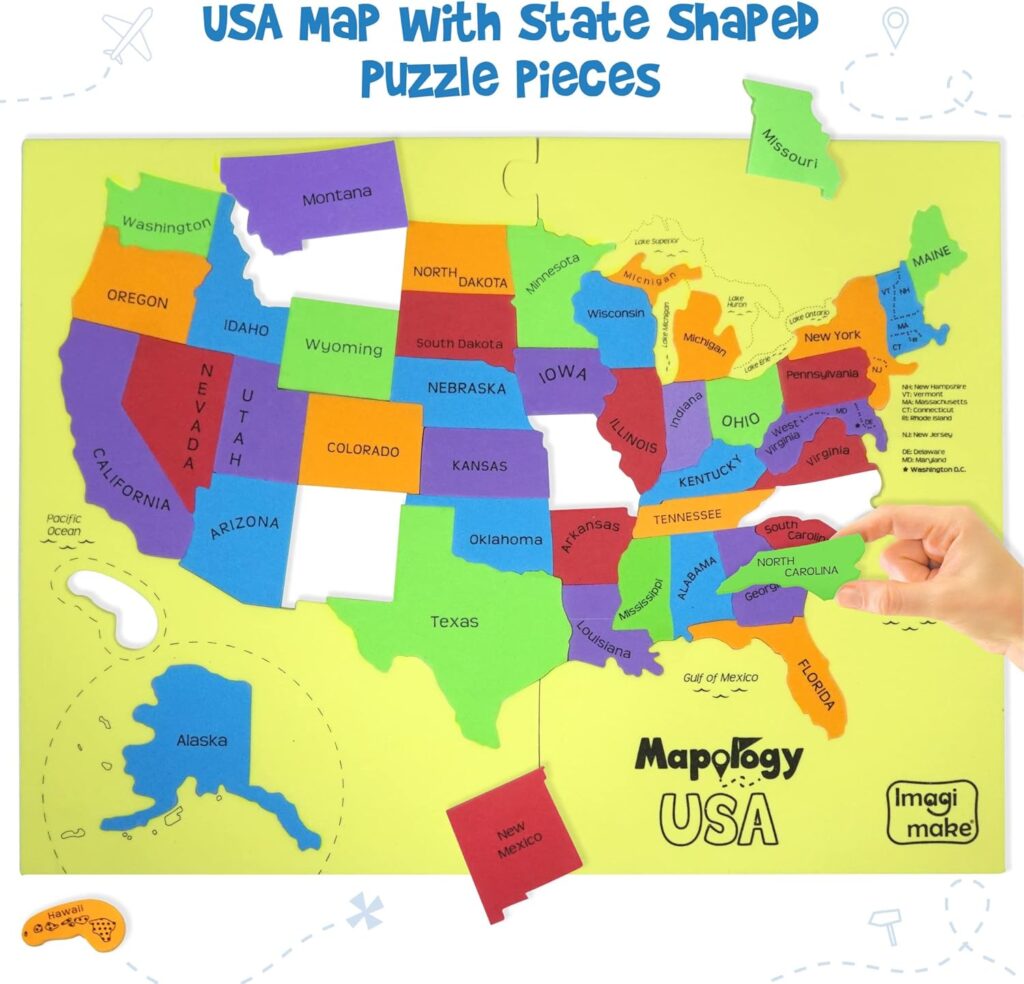
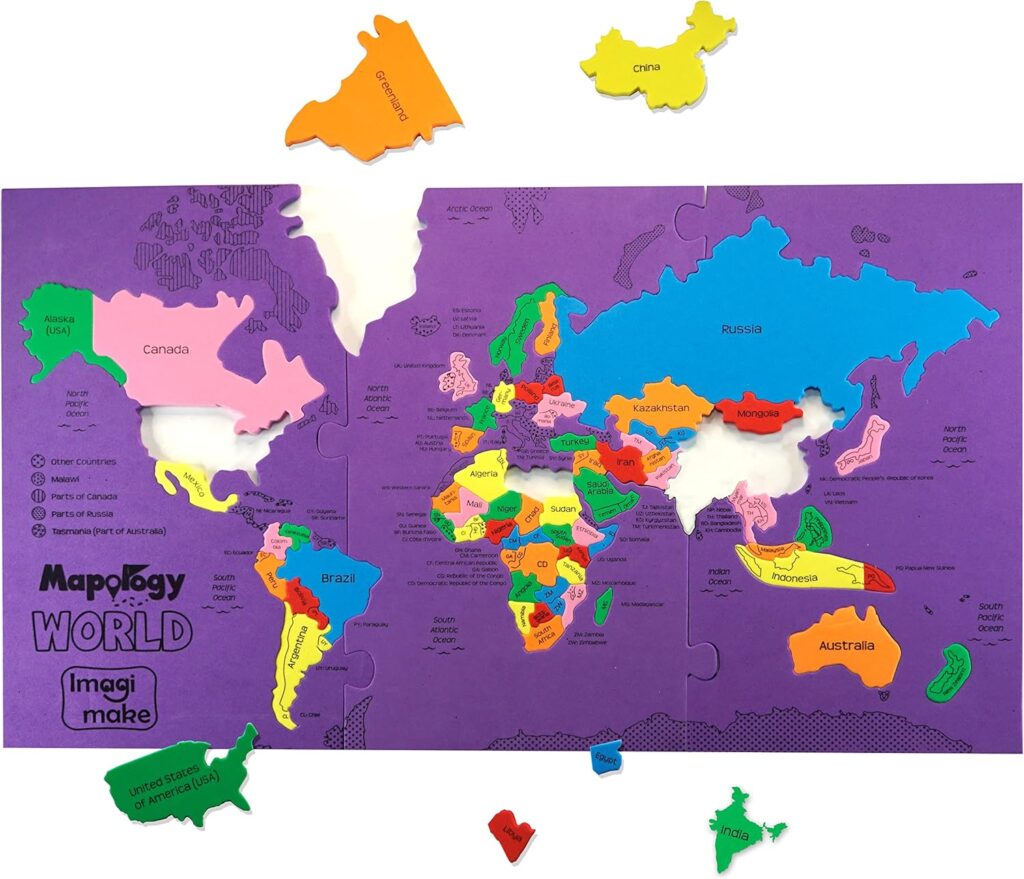
It also comes with a little bonus model-building activity where you can construct The Pentagon out of foam. My son felt like a full-blown architect and proudly displayed it like a mini LEGO trophy (we are a Lego-Obsessed family after all). And because it’s all foam, it’s sturdy, light, and forgiving when pieces get tossed across the room mid-tantrum (we’ve all been there).
Incorporating map puzzles into our routine has also sparked an interest in travel and global cultures. We’ve started exploring books and documentaries about different countries, and my child often expresses a desire to visit the places we’ve “traveled” to through our puzzles. This curiosity about the world is something I cherish and aim to nurture.
So Why Geography Puzzles Are So Good for Kids
Geography puzzles do so much more than teach kids where states and countries are located. As children work through map puzzles, they also build problem-solving skills, spatial awareness, memory, and fine motor coordination. Montessori educators especially value map puzzles because children physically handle and place countries or states into position, helping them better understand how different places connect together.
What I personally love about geography puzzles is that they make learning feel natural. Kids are often so focused on completing the puzzle that they don’t even realize how much geography information they’re absorbing along the way.
Why Kids Tend to Remember Geography Better Through Puzzles
One thing I noticed with map puzzles is that kids remember locations much faster when they physically interact with them instead of simply looking at a map in a book. Picking up puzzle pieces, rotating them, and fitting them into place creates a more hands-on learning experience that helps many children retain information more easily.
For younger kids especially, puzzles turn geography into something visual and interactive instead of overwhelming or abstract.
Great for Screen-Free Learning
One reason I’m always drawn to educational puzzles is because they give kids a break from screens while still keeping them engaged. Geography puzzles are one of those rare activities that can quietly hold a child’s attention while also encouraging focus, patience, and independent play.
They’re especially helpful for: rainy days, quiet afternoons, homeschool activities, family game nights, travel learning
If you’ve got a curious kid or just want to sneak in some screen-free, educational fun these puzzles are such a great pick. They’ve sparked so many conversations in our home, and best of all, they’ve made geography feel exciting, not intimidating. Bonus: you might even brush up on your own map skills while your little one shows you where Madagascar is (no shame, I needed the reminder too).
Geography Puzzles Encourage Curiosity About the World
A really unexpected benefit of map puzzles is how often they lead to conversations. Kids naturally start asking questions like:
- “Where is this country?”
- “Why is this state shaped like that?”
- “Which animals live there?”
- “Can we visit this place someday?”
That curiosity is honestly one of the best parts. Geography puzzles can become an easy introduction to learning about cultures, landmarks, animals, foods, and different parts of the world.
Why Montessori Classrooms Love Map Puzzles
Map puzzles are extremely popular in Montessori education because they combine tactile learning with geography exploration. Children use their hands to trace borders, remove pieces, and rebuild maps, which strengthens both memory and fine motor development.
The hands-on nature of map puzzles also helps children better understand:
- country borders
- continent placement
- relative sizes of regions
- spatial relationships
That’s a big reason these puzzles tend to stick with kids long-term.
What surprised me most is how often these puzzles sparked conversations with my son. He started recognizing state names outside the puzzle, asking questions about different countries, and getting excited when he spotted places he remembered from the map. It became one of those activities that felt both educational and genuinely fun at the same time.